cycles · investor psychology
"It's gone up too long" is not an argument, it's a bias
The current bull market is 1,326 days old. The historical average since 1949 is 1,965. Cycles don't end because they age; they end for causes. Confusing price with time is the silent mistake.
There's a phrase that reappears in every bull cycle.
"It's been going up for too long."
It sounds prudent. It sounds like experience. And it is, almost always, the most silent way to miss opportunity.
What the data says
The S&P 500 has been in a bull market for 1,326 days since the October 2022 lows. Sounds like a lot, until you compare it with history:
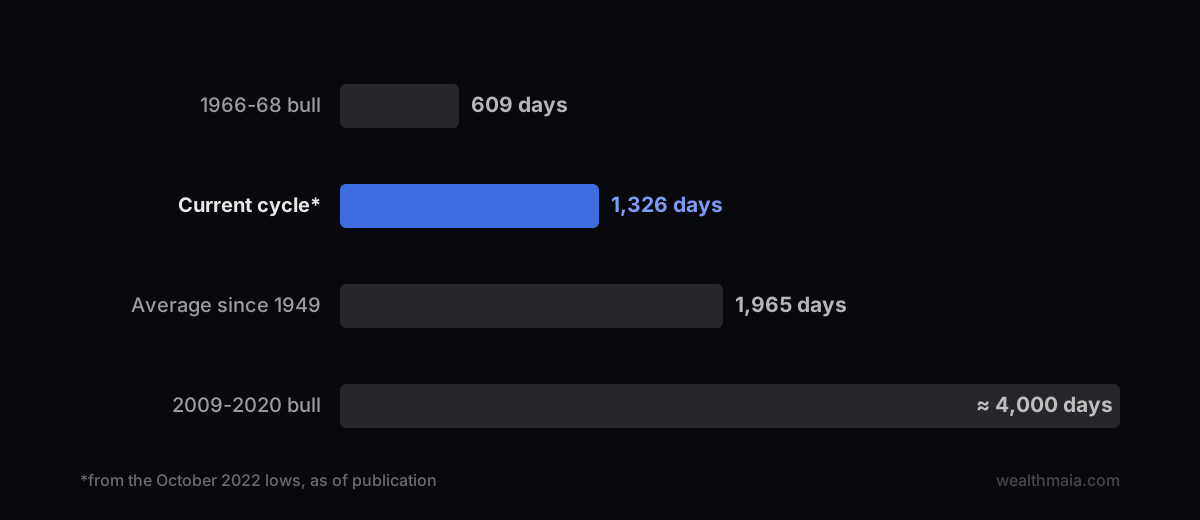
Since 1949, the average bull cycle has lasted 1,965 days. The current one is 639 days below that average. And the 2009-2020 cycle passed through exactly this point in November 2012, with more than seven years still ahead of it.
But the argument isn't just weak; it's wrong
Bull cycles don't end because they age. They end for concrete causes: earnings contractions, liquidity shocks, excessive monetary tightening, or exogenous events that break the growth narrative.
History makes it plain. The 1966-68 cycle lasted just 609 days. The nineties cycle lasted almost six times longer. The difference wasn't the clock; it was the macro environment holding them up.
The trick your brain plays
Behind the duration argument sits a cognitive substitution: since we can't answer the hard question ("when will this market end?"), we swap it for an easy one ("how long has it been going up?"). And intuition answers: "too long".
It's the same mechanism that judges a book by the pages it has left. The easy question has an answer; the hard one is the one that matters.
Price can be expensive. Time cannot be "too long".
That valuations are demanding is a legitimate argument; it can be measured, debated, checked against earnings. That the cycle "has run long" is not: without a concrete catalyst behind it, the calendar is not a market mechanism.
How to use this
When you read "the longest bull market in history" or "this has to end soon", translate it: someone is answering the easy question.
The useful questions are different ones: are earnings growing or contracting? Is liquidity expanding or draining? Is there an identifiable shock on the horizon with a date and a mechanism? If the answer to all three is "I don't know", the cycle's age won't tell you either.
They are different variables. And confusing them is one of the most silent ways to miss opportunity.