ipos · market mechanics
The $165 between you and the insiders
Cerebras went public at $185. Your first available price was $350. Anatomy of the mechanism that turns a "historic IPO debut" into the retail investor's bill.
185 dollars.
That's the price at which large funds bought Cerebras in its IPO. You couldn't buy at 185. Your first available price was 350.
This is the story of the $165 that separate you from them, and why, systematically, you're almost always the one who pays.
The debut that made every front page
Cerebras, Nvidia's rival in AI chips, went public on May 14. The banks placed the shares at $185 (above even the projected range) with institutional investors and preferred clients.
The next day, the stock opened at $350. It touched $386. It closed its first day up +68%. The headlines called it a historic debut. Its valuation brushed $70 billion.
Today it trades at $206.
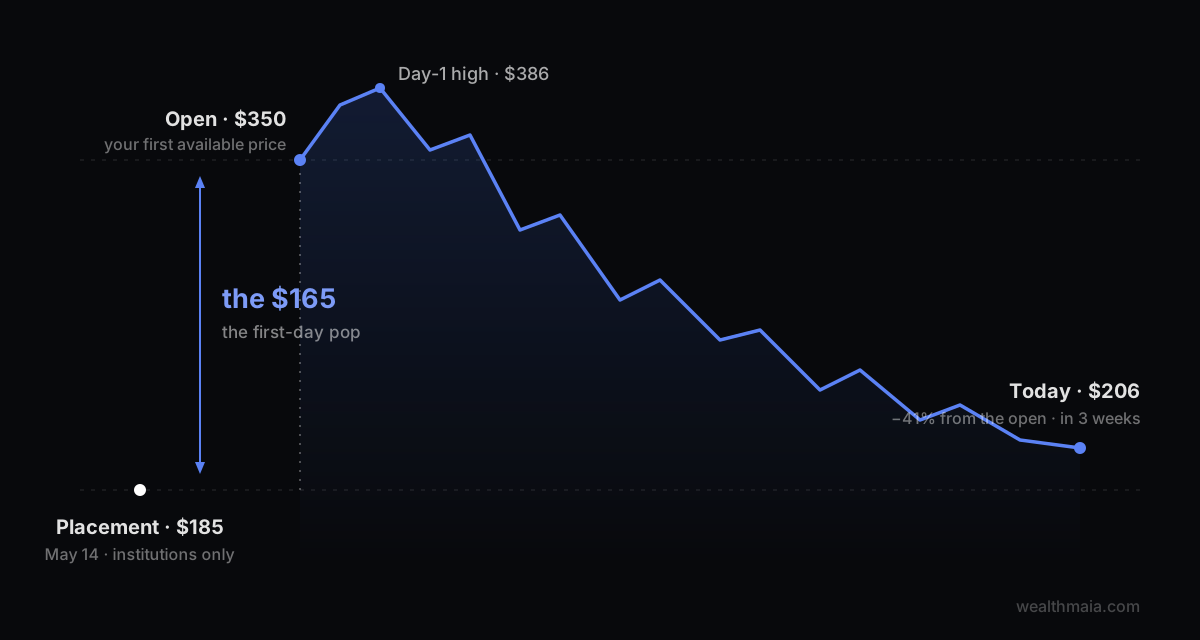
Whoever had shares allocated at 185 is still up. Whoever bought the open at 350, riding the headline euphoria, is down more than 40%. Whoever chased the high, nearly half. In three weeks.
The mechanism almost nobody explains
That first-day +68% everyone celebrates measures exactly one thing: the distance between what insiders paid and what you paid.
The pop exists precisely because the offering price is set low, on purpose, to guarantee insiders win on day one. And the retail investor buying at 350, convinced they're boarding a rocket, is, literally, the liquidity those insiders sell into.
Nobody "gets it wrong" pricing an IPO far below where it will open. It's the design, not the error.
Why it collapses afterwards
At its peak, Cerebras was valued at 137 times sales. Its order backlog is $24.6 billion, but more than $20 billion comes from a single customer: OpenAI.
In other words: an other-worldly multiple for a company whose future depends almost entirely on one contract.
The technology is real; it runs inference fifteen times faster than a GPU. But buying a good company at the wrong price is still losing money. Those are two different questions, and the second one almost never gets asked:
- Is the business good? Probably yes.
- Was the first-day price the optimal entry point? Historical data says, systematically, no.
This isn't an anecdote; it's the pattern
Across the 30 largest tech IPOs between 2012 and 2024:
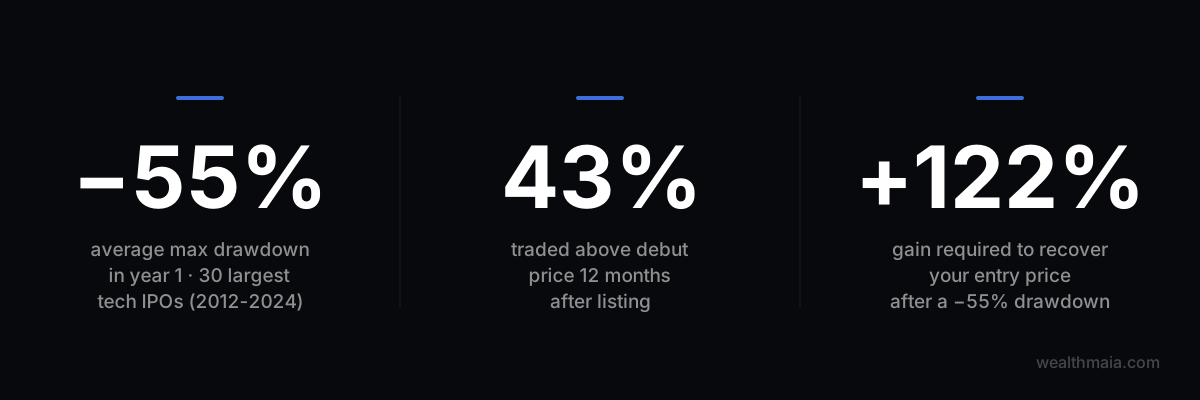
And here's the part nobody disputes: even picking the absolute winner, the path punishes the average investor.
- MongoDB: +103% in year 1 · max drawdown −26%
- Palantir: +153% in year 1 · max drawdown −53%
- Datadog: +128% in year 1 · max drawdown −42%
The math explains it: a −55% drawdown requires a +122% recovery just to get back to your entry price. The function is not symmetric. The geometric return your capital experiences is far below the asset's arithmetic return, and the difference is paid by variance, not by the market.
The average investor doesn't sell at the peak. They sell in the valley.
Why this matters now
2026 is the biggest IPO year in a decade. SpaceX has already debuted. OpenAI, Anthropic and others are warming up.
The same machine that priced Cerebras at 185 so it would open at 350 is preparing the next ones. The script is already written: low offering price, spectacular pop, euphoric headlines, and a retail investor stepping in on the last rung.
The asymmetry between who sells (insiders, VCs, investment banks with strategically designed lockups) and who buys (a market at peak media coverage) is structural. It doesn't disappear. It only changes shape.
Next time you see "+68% on debut day", you know who collected that 68%.